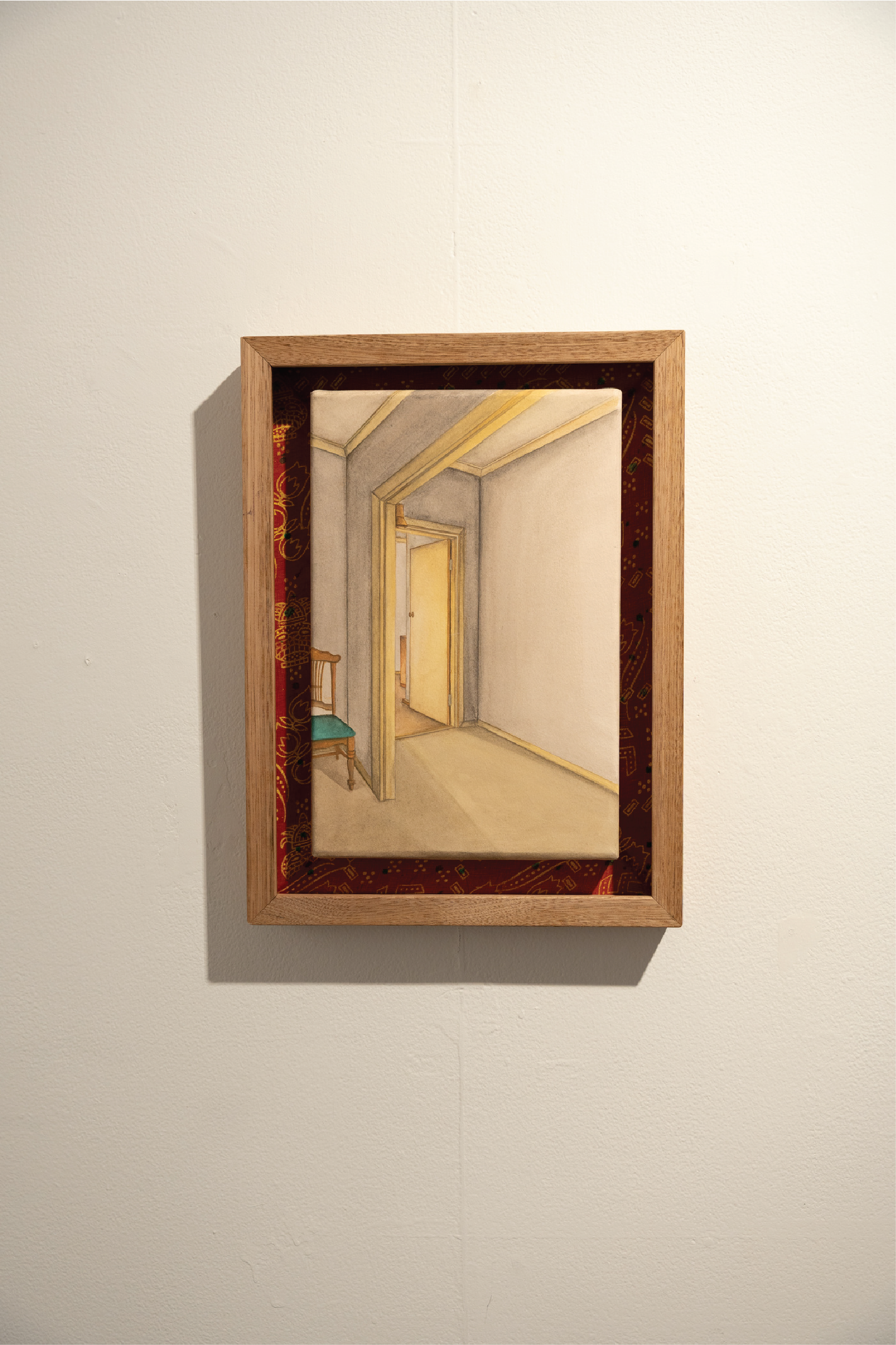
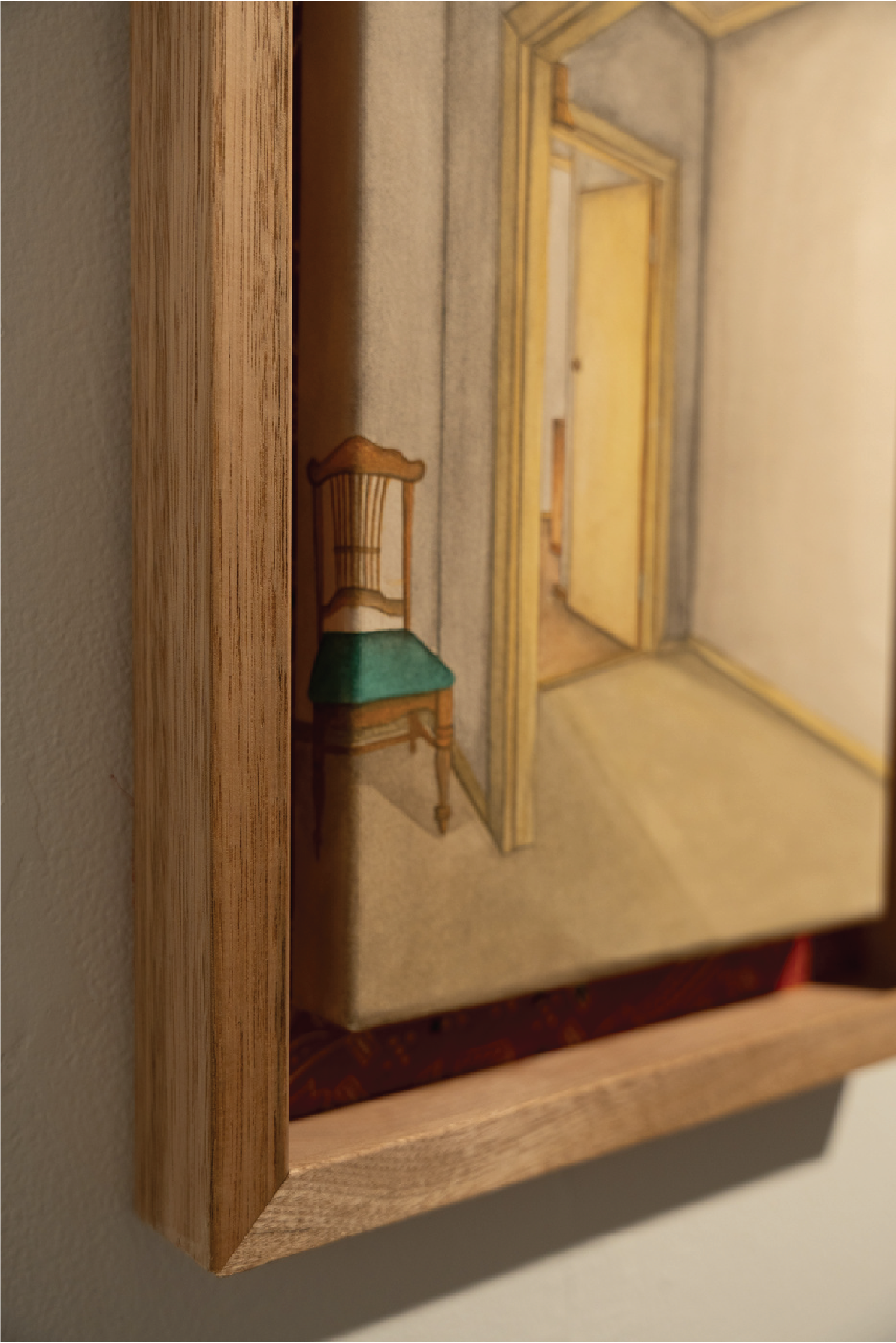
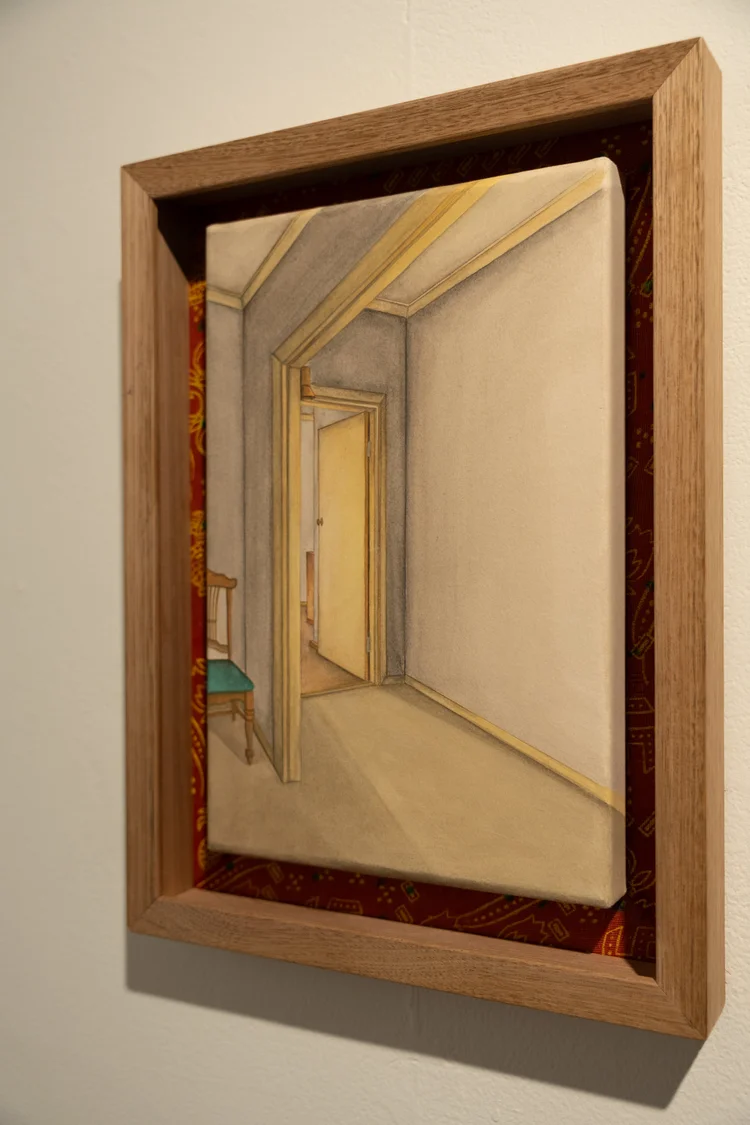
In this Australian house where I live, I spend long hours sitting in spaces like this. A simple chair rests in an empty room, and through layered doorways, I see a window with white curtains moving softly, as if touched by breath.
The light coming through that distant window fills the room with a quiet heaviness. As I sit here, looking through these thresholds, the air touches my face gently, evoking home in India—my family, the festivals, and the memories that linger. This space holds a paradox: it feels both empty and full. Empty, because it lacks the familiar warmth of my culture; full, because it absorbs my emotions, holds the weight of migration, and carries my longing. Even voices on video calls seem to inhabit the room, filling it with invisible presence.
The corridor draws the eye inward, one space leading into another, like walking through memory itself. The warm landscape outside glows in contrast to the cool greys inside—a silent conversation between where I am and where I belong. Between two worlds, silence becomes my language.